Resting Places, Roscoe Gardens, Liverpool.
(Visited June 2025)
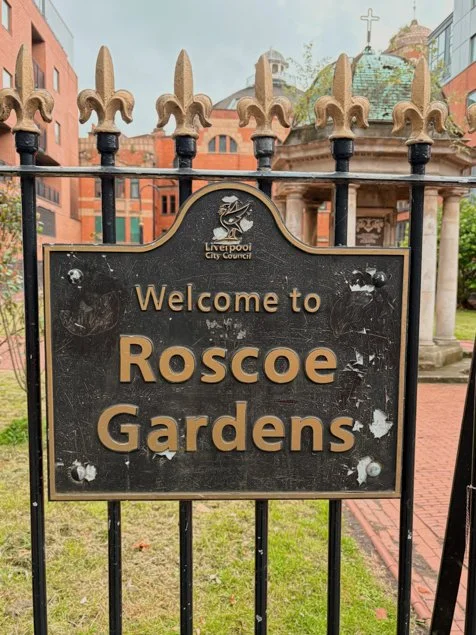
Opposite Mount Pleasant car park lies a forlorn place called Roscoe Gardens. Years ago, when Mount Pleasant was one of the main car parks, I would nose out from the side and look for The Shaftesbury Hotel that was next to it. This is because late night Channel 4 used to show good things like Letter to Brezhnev way past my bedtime.
‘William Roscoe was an English banker, lawyer, and briefly a Member of Parliament. He is best known as one of England's first abolitionists, and as the author of the poem for children, The Butterfly's Ball and the Grasshopper's Feast. He was also respected as a historian and art collector, as well as a botanist and miscellaneous writer. He is referred to as the Father of Liverpool Culture.’ SOURCE
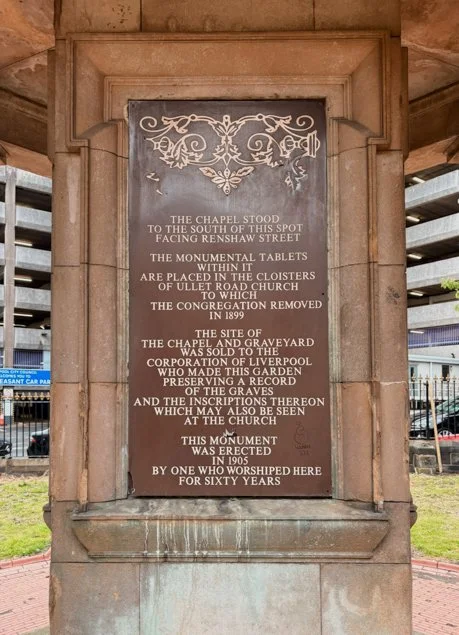
The space was formerly the burial ground for generations of Unitarians who gifted the space to the City of Liverpool for the public to enjoy as a tranquil space to visit.
I honestly have only passed it in a car or by nosing off the roof of the car park, but stopping to walk past and go in to have a look, was really special.
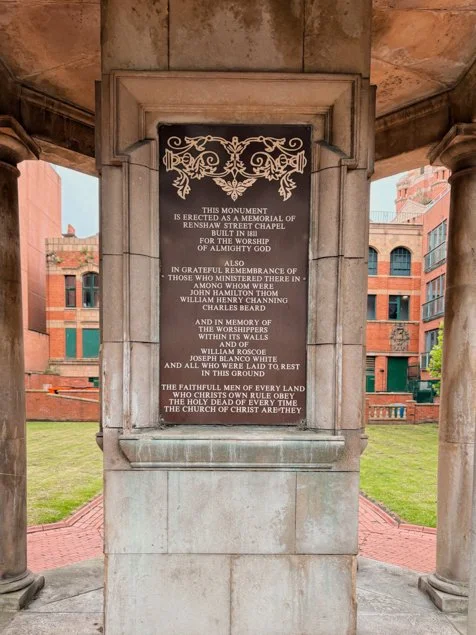
‘The Unitarians erected the domed monument in 1905, which was Grade II listed in 1975. Over 367 people are buried there.’ SOURCE
It is a really nice place that has a friend’s group and is very much loved by the local community. Go HERE to read about the time the City Council turned the area into a pop-up bar. I mean, read the surroundings, mate.
Go HERE to read about the Botanical Garden that was on the site and HERE to visit the Liverpool Botanical Trust.
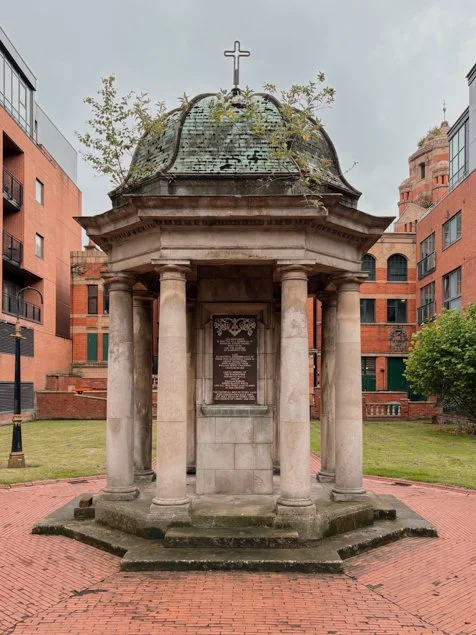
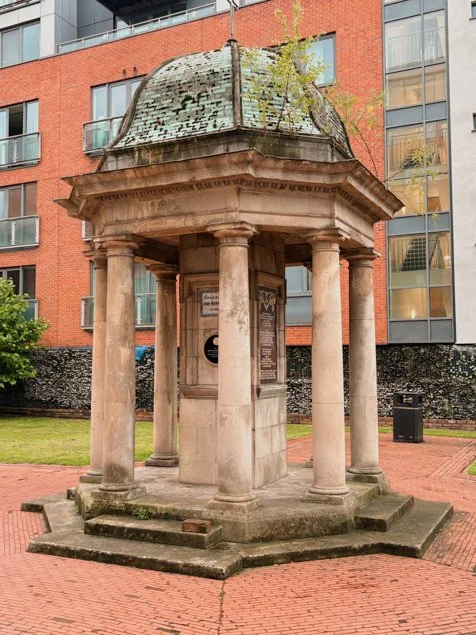
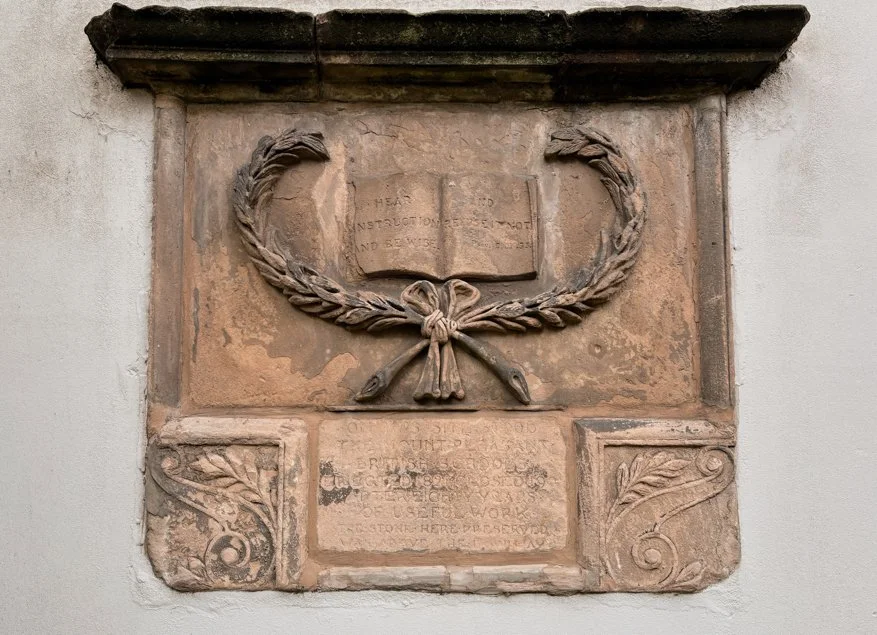
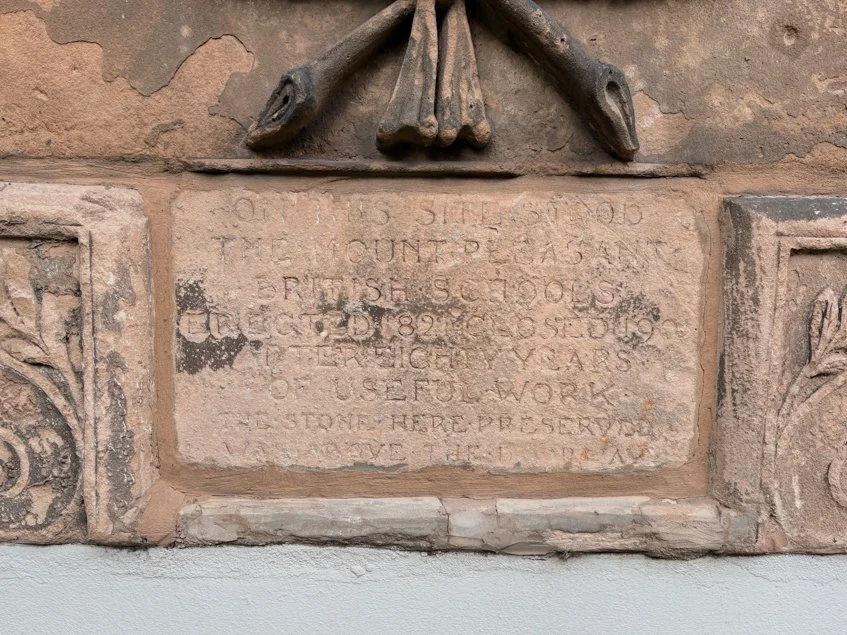
The memorial on the wall is for the Mount Pleasant school which was run by the Unitarian congregation and stood on an adjacent site.
The inscription reads,
‘On this site stood the Mount Pleasant British Schools erected 1821 closed 1901 after eighty years of useful work. The stone here preserved was above the doorway.’
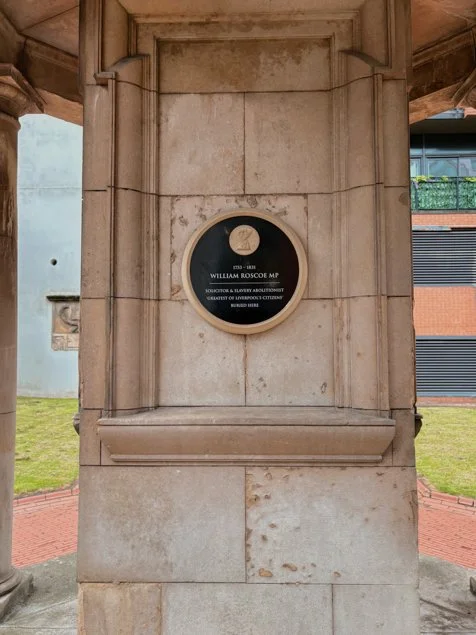
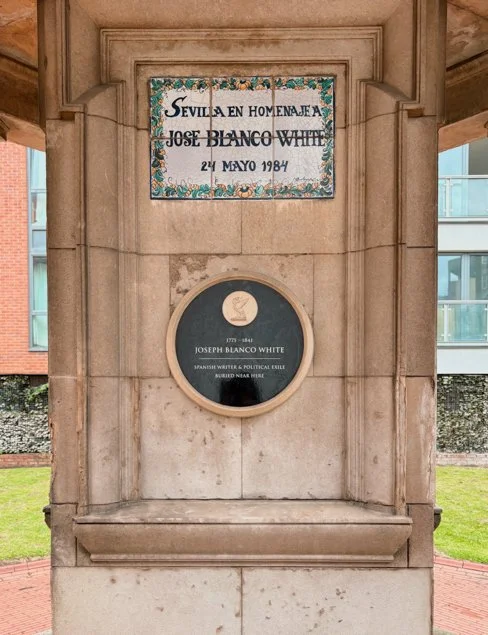
On the side of the monument is a plaque to Jose Blanco White,
‘Jose Blanco White was a Spanish theologian, writer and poet. He campaigned against intolerance in different ways: against Napoleonic invasion of Spain, for the religious right to convert between churches (which he did from Catholic priesthood to Anglicanism), and in support of the independence of South American countries from Spanish colonial rule. He is best remembered for his sonnet Night and Death which he dedicated to Samuel Coleridge.’ SOURCE
You honestly never know what you are going to find and learn about.